Iniciar sesión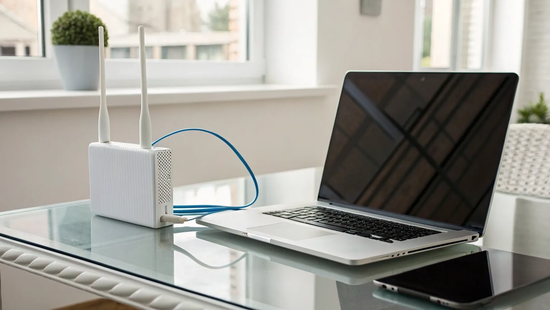
It’s 7 p.m. on a Tuesday. You’re trying to stream the season finale of your favorite show, your teenager is in a competitive online game, and your partner is on a late video call for work. Suddenly, your show starts buffering and the video call freezes. This is the moment when the question of 100 mbps internet speed vs 1 gig becomes very real. Your home’s internet connection is a shared resource, and when everyone is online at once, you can quickly hit your limit. This guide will help you diagnose your family’s internet habits and figure out if your current plan can handle the pressure or if it’s time for an upgrade.
Key Takeaways
- Choose your speed based on your daily habits: A 100 Mbps plan is a great fit for most households, handling everyday streaming and remote work with ease, while a 1 Gig plan is built for power users, content creators, and large families with many connected devices.
- Your home equipment matters as much as your plan: To get the speeds you pay for, make sure your router can handle them and consider using a wired Ethernet connection for stationary devices like gaming consoles or desktop computers to get the most stable performance.
- Fiber offers more than just fast downloads: The technology itself provides a more reliable connection with symmetrical upload and download speeds, which is a game-changer for crystal-clear video calls, uploading large files, and lag-free online gaming.
100 Mbps vs. 1 Gig: Which Internet Speed Do You Need?
Choosing the right internet plan can feel a little overwhelming, especially when you see terms like Mbps and Gig thrown around. It’s easy to think that faster is always better, but the truth is, the best speed for you depends entirely on how you and your family use the internet. A plan that’s perfect for your neighbor might be overkill, or not nearly enough, for your home.
Think of it like choosing a car. A sports car is fast and powerful, but a reliable sedan gets the job done perfectly for daily commutes. Both are great options, but they serve different needs. The same goes for your internet. Let’s break down what these speeds actually mean and how they affect everything from your Netflix binge to your work-from-home video calls, so you can find the perfect fit for your household.
What Do Mbps and Gig Speeds Mean?
Let's start with the basics. Internet speed is measured in bits per second. Mbps stands for megabits per second, while Gbps stands for gigabits per second. The key thing to know is that one gigabit is equal to 1,000 megabits. So, a 1 Gig (or 1 Gbps) connection is 10 times faster than a 100 Mbps connection.
Imagine your internet connection is a highway. A 100 Mbps plan is like a solid, two-lane road that’s great for everyday traffic. A 1 Gig plan is like a ten-lane superhighway, allowing much more data to travel at once without causing a traffic jam. This difference becomes most noticeable when you’re downloading large files or have many people using the internet at the same time.
How Speed Impacts Your Daily Online Life
So, how does this 10x speed difference actually feel in your day-to-day life? For many households, a 100 Mbps connection is plenty. It can comfortably handle a few people streaming shows in 4K, browsing social media, and joining video calls without much trouble. It’s a great, reliable speed for the average family’s needs.
A 1 Gig connection, on the other hand, is built for power users. It’s ideal for homes where multiple people are simultaneously engaged in high-demand activities, like competitive online gaming, streaming on several screens, and downloading massive files. While the main benefit for most is that things download much faster, it becomes a necessity for homes with tons of connected smart devices or for professionals who transfer large files for work.
What Can You Do with 100 Mbps Internet?
Think of a 100 Mbps internet plan as a fantastic all-rounder. It’s a popular choice for a reason: it provides more than enough speed for the daily online activities of most individuals, couples, and small families. With this speed, you can easily stream your favorite shows, work from home, join video calls, and browse the web across several devices without any major hiccups. It’s a significant upgrade from older internet connections and provides a smooth, reliable experience for the modern household.
When you pair 100 Mbps with the power of fiber optics, you get a connection that’s not just fast but also incredibly stable. This means you can count on it to perform when you need it most, whether you're submitting a work project right on the deadline or settling in for a weekend movie marathon. It’s the perfect entry point into high-speed internet, covering all your essential needs with performance to spare.
Stream Shows and Movies
With a 100 Mbps connection, you can say goodbye to the dreaded buffering wheel. This speed is more than capable of handling high-definition and even 4K streaming on multiple screens at once. In fact, 100 Mbps is fast enough to stream four separate 4K videos simultaneously. This means one person can be watching the big game in the living room, another can be catching up on a drama on their tablet, and the kids can be watching cartoons, all without interrupting each other. It’s the kind of seamless streaming experience that makes movie nights and lazy Sundays much more enjoyable.
Work From Home and Take Video Calls
For anyone working remotely, a stable internet connection is non-negotiable. A 100 Mbps plan is an excellent choice for a productive home office. It provides plenty of bandwidth for all your essential tasks, from sending large files to joining back-to-back video conferences. A typical Zoom call only requires about 2 Mbps, so 100 Mbps leaves you with tons of capacity. More importantly, a fiber connection gives you the reliability you need. With dependable internet services, you can focus on your work without worrying about a spotty connection dropping you from an important meeting.
Handle Everyday Online Gaming
You don’t need the fastest plan available to be a successful online gamer. While massive downloads will certainly go quicker with more speed, smooth gameplay actually depends more on low latency, often called "ping." Latency is the time it takes for your device to communicate with the game server. Because fiber internet offers incredibly low latency, a 100 Mbps plan is perfect for handling most online gaming. You can jump into a match of your favorite game and enjoy a responsive, lag-free experience where your actions happen in real-time.
Connect Multiple Devices
The average home is filled with internet-connected devices, from laptops and smartphones to smart TVs and speakers. A 100 Mbps plan is well-equipped to handle the demands of a modern, connected household. It can comfortably support multiple users browsing, streaming, and working at the same time. You’ll have enough bandwidth for everyone to be on their phones, a couple of laptops to be in use, and a smart TV streaming a show. If your home is filled with dozens of smart gadgets or you have multiple serious gamers and 4K streamers, you might want to explore faster internet plans.
What Can You Do with 1 Gig Internet?
If 100 Mbps is a reliable family car, 1 Gig internet is a high-performance sports car. It’s not just about getting from point A to point B faster; it’s about unlocking a completely new experience. With speeds of 1,000 Mbps, a 1 Gig connection handles everything you throw at it, all at once, without breaking a sweat. This is the kind of speed that supports serious gamers, professional content creators, large families with dozens of devices, and anyone who wants to be ready for the future of technology. It eliminates lag, buffering, and slowdowns, creating a seamless digital life.
Download and Upload Files in Seconds
Remember waiting minutes, or even hours, for a big file to download? With 1 Gig internet, those days are over. A 1 Gbps connection can download files at about 125 megabytes per second, meaning you could download a 10 GB file, like a new video game or a full HD movie, in less than two minutes. But the real game-changer with fiber internet is the upload speed. Most internet plans have much slower uploads, but Novos Fiber offers symmetrical speeds. This means your uploads are just as fast as your downloads, which is essential for content creators uploading 4K videos, professionals backing up huge project files to the cloud, or anyone who wants to share high-resolution photos instantly.
Stream in 4K and 8K Without Buffering
With a 1 Gig connection, you can say goodbye to the dreaded buffering wheel for good. This speed is more than enough to stream crystal-clear 4K or even 8K content on multiple screens at the same time. In fact, a gigabit connection is so powerful it could let around 20 people stream 4K video simultaneously and still have bandwidth to spare. Imagine a Friday night at your house: a 4K movie is playing in the living room, your kids are watching their favorite streamers on their tablets, and a live sports game is on another TV. With 1 Gig internet, none of these streams will stutter or drop in quality, giving everyone in your home the best possible viewing experience.
Power a Professional Workflow
For anyone working from home, a 1 Gig connection is a massive upgrade in productivity and professionalism. It provides the stability and speed needed for a demanding workflow, especially in households with multiple remote workers. You can join video conferences with flawless audio and video, collaborate on cloud documents in real-time, and send or receive massive files without a second thought. This level of performance ensures your internet connection is never the bottleneck in your workday. With our reliable fiber internet services, you can focus on your work, confident that your connection can handle anything your job demands.
Support a Fully Connected Smart Home
From smart speakers and security cameras to thermostats and video doorbells, the modern home is filled with devices that need a constant internet connection. While each device may not use much bandwidth on its own, they add up quickly and can strain a slower network. A 1 Gig plan provides more than enough capacity to run a fully connected smart home without compromising performance for your other activities. You can have a whole house full of smart gadgets running smoothly while multiple people are also gaming, streaming, and working from home. It’s the powerful, reliable backbone your smart home needs to operate at its best.
Is 100 Mbps Enough for Your Household?
Deciding if 100 Mbps is the right speed for you feels a bit like choosing a car. A small sedan is perfect for a solo commuter, but it won't work for a family of six that loves road trips. The right internet speed depends entirely on your unique situation. How many people are in your home? How many devices are connected at once? Are you streaming movies, battling it out in online games, or just checking email? Let’s walk through the key factors to help you figure out if a 100 Mbps plan is your perfect fit or if you need something with a little more horsepower.
How Bandwidth Is Shared Across Devices
Think of your internet bandwidth as a pipeline to your home. A 100 Mbps plan provides a solid, steady flow, but that flow has to be shared among every connected device. If one person is streaming a 4K movie, which uses about 25 Mbps, that leaves 75 Mbps for everyone and everything else. A 100 Mbps connection can comfortably handle about four 4K streams at the same time. For most families, that’s plenty. But if you have a gamer downloading a huge file, someone on a video call, and a few others watching Netflix, you’re sharing that 100 Mbps pipeline. For everyday browsing and streaming, it’s often sufficient, but it’s important to remember that every device takes a slice of the pie.
Handling Peak Internet Hours
Your internet connection can feel different depending on the time of day. At 10 a.m. on a weekday, your 100 Mbps plan might feel incredibly fast. But what about at 7 p.m., when the kids are gaming, you’re streaming your favorite show, and your partner is on a video call? This is what we call "peak hours," when everyone is online at once. During these times, a 100 Mbps plan can get stretched thin. If you frequently find your connection slowing down or buffering during evenings and weekends, it’s a sign that your household’s simultaneous usage is pushing the limits of your current speed. It’s all about how many people are using the internet heavily at the same time.
Meeting Your Smart Home's Demands
These days, it’s not just our phones and computers that are online. Smart home devices like security cameras, video doorbells, smart speakers, and even light bulbs are constantly connected to your Wi-Fi. While a single smart plug doesn’t use much data, the demand adds up. A few security cameras streaming HD video can put a significant and continuous strain on your network. If you have a handful of smart devices, a 100 Mbps plan will likely handle them just fine alongside your other activities. But if you’re running a fully connected smart home, you might need more bandwidth to keep everything operating smoothly. All of our internet plans are designed to support modern, connected homes.
Comparing Speeds for Common Activities
It’s one thing to see numbers on a page, but what do they actually mean for your day-to-day life? The best way to understand the difference between 100 Mbps and 1 Gig is to look at how they handle the things you do online every single day. From your evening streaming habit to your work-from-home video calls, the right speed can make everything feel seamless. Let's break down how these two speeds perform for some of the most common online activities.
Streaming Video
Whether you’re catching up on the latest hit series or having a family movie night, smooth streaming is a must. A single 4K video stream, like the ones on Netflix or Disney+, uses about 25 Mbps of your bandwidth. With a 100 Mbps plan, you could comfortably stream on four different devices at once in 4K. But if your household has multiple TVs, tablets, and phones all streaming simultaneously, a 1 Gig plan ensures you never see that dreaded buffering wheel. It gives you so much breathing room that you could have dozens of 4K streams running without a hiccup, making it perfect for large families or media lovers.
Competitive Online Gaming
For online gamers, speed is important, but it’s not the whole story. The real game-changer is latency, also known as ping. This measures how quickly your device communicates with the game’s server. Lower latency means less lag and a smoother, more responsive gaming experience. While 100 Mbps is often enough for casual gaming, a 1 Gig fiber connection provides the ultra-low latency competitive gamers need. Plus, with a gigabit plan, someone else in the house can stream a movie or download a huge file without causing lag spikes that could cost you the match.
Transferring Large Files
If you’ve ever waited ages for a file to upload or download, you know how frustrating it can be. This is where a 1 Gig connection truly shines. For content creators, remote workers, or anyone who handles large files, the difference is night and day. A 1 Gig plan can turn a multi-hour download into a matter of minutes. Think about uploading a high-resolution photo gallery for a client or downloading the latest 100 GB video game. With a gigabit connection from a provider built on trust like Novos Fiber, those tasks become quick and painless, giving you more time to focus on what matters.
Video Conferencing
In a world of remote work and virtual meetings, a clear and stable video call is non-negotiable. A high-quality group video call can use around 10 Mbps. A 100 Mbps plan can easily handle a few simultaneous calls, but what happens when the whole family is online? If you’re on an important work call while your kids are in online classes and your partner is in another meeting, a 1 Gig plan ensures everyone has a crystal-clear connection. Fiber internet’s symmetrical speeds also mean your upload performance is just as fast as your download, so your video feed will always look sharp and professional. Check out our services to see which plan fits your home’s needs.
When to Upgrade from 100 Mbps to 1 Gig
Deciding between a solid 100 Mbps plan and a powerful 1 Gig connection comes down to how you actually use the internet. While 100 Mbps is plenty for some, it can feel restrictive for others. If you're wondering whether it's time to make the leap, let's look at a few common scenarios that signal you might need more speed. Your daily habits, work demands, and even your future plans can help you find the right fit.
Your Household's Internet Habits
A 100 Mbps plan often works well for one or two people who are browsing, checking email, and streaming on a single device. But what happens when your partner is on a video call, your kids are gaming online, and you’re trying to watch a movie? That’s when a 100 Mbps connection can start to feel crowded. If you find your family scheduling internet time or constantly asking others to log off, it’s a clear sign your bandwidth is stretched thin. An upgrade gives everyone the freedom to do what they want online, all at the same time.
If You're a Content Creator
For anyone who creates content, upload speed is just as important as download speed. If you’re a streamer, YouTuber, or designer who regularly sends large files to clients, a 100 Mbps plan can become a serious bottleneck. Waiting hours for a 4K video to upload is frustrating and inefficient. With a 1 Gig fiber connection, you get symmetrical speeds, meaning your upload speeds are just as fast as your downloads. This allows you to transfer massive files in minutes, not hours, and stream your content in high quality without lag.
Future-Proofing Your Home Network
Think about how many internet-connected devices you have now compared to five years ago. The list keeps growing: smart TVs, security cameras, thermostats, speakers, and even refrigerators. While 100 Mbps might handle your current setup, it may not be enough for the smart home of tomorrow. Choosing one of our faster internet plans is a way to future-proof your home. It ensures you have more than enough capacity to add new technology as it comes out, without having to worry about your network slowing down. It’s an investment in a seamless connected future.
Juggling Multiple 4K Streams and Gaming
A single 4K movie stream can use up to 25 Mbps of your bandwidth. If you have a family of four all watching their own shows in 4K, you’ve already maxed out a 100 Mbps connection. Add an online gamer to the mix, and someone is bound to experience buffering or lag. This is where 1 Gig internet really shines. It provides so much bandwidth that multiple people can stream in ultra-high definition, game competitively, and browse the web simultaneously without interfering with each other. It eliminates the competition for bandwidth and ensures everyone has a smooth, uninterrupted experience.
Is 1 Gig Worth the Extra Cost?
The jump from 100 Mbps to 1 Gig often comes with a price increase, so it’s smart to ask if the extra speed is worth the money. The answer really comes down to how you use the internet. For some, a gigabit connection is a game-changer that eliminates daily frustrations. For others, it might be more power than they’ll ever use. Let’s break down the costs and benefits to help you figure out which plan makes the most sense for your wallet and your lifestyle.
Breaking Down Monthly Costs
When you look at internet plans, you’ll see that gigabit speeds come at a premium. A 1 Gbps plan can cost anywhere from $80 to $120 per month, depending on the provider. While that might seem like a big leap from a 100 Mbps plan, it’s important to look at the whole picture. With a fiber provider like Novos, you get transparent pricing without the surprise fees or sudden price hikes you might see elsewhere. When you compare our services, think about the monthly cost in relation to the performance you’ll get. Is a few extra dollars a month worth never seeing a buffering screen again?
Finding the Best Value for You
The best value isn’t always the fastest or the cheapest plan; it’s the one that fits your needs perfectly. For smaller households or individuals who mainly browse, stream in HD, and handle emails, 100 Mbps is often a cost-effective and perfectly capable choice. For most everyday activities, the main advantage of 1 Gig is that downloads finish faster, which is a great convenience but not always a necessity. Before you commit to a higher-tier plan, take a moment to think about your actual usage. If your current connection handles everything you throw at it without lag, you might find the best value in a more modest plan.
Thinking About Long-Term Value
While 1 Gig might feel like overkill for some households today, it’s also a way to prepare for the future. The number of connected devices in our homes is constantly growing, from smart speakers and security cameras to 4K TVs and virtual reality headsets. A gigabit plan provides enough bandwidth for everyone and everything to run smoothly at the same time. If you have a house full of heavy internet users, work with massive files, or simply want a connection that will keep up with new technology for years to come, investing in a 1 Gig plan offers incredible long-term value and peace of mind.
Common Myths About Internet Speed
Choosing an internet plan can feel confusing, especially with all the technical terms and marketing claims out there. It’s easy to get caught up in the idea that faster is always better, but that’s not the whole story. Let's clear up a few common myths about internet speed so you can feel confident you’re picking the right plan for your home, without overpaying for speed you don’t actually need. Understanding these points will help you find that sweet spot between performance and price.
Why Faster Isn't Always Better
It’s tempting to go for the fastest plan available, but for many households, a gigabit connection is like having a sports car you only drive in city traffic. It’s more power than you can realistically use. For everyday activities like streaming HD shows, joining video calls, and online gaming, a solid 100 Mbps plan is often plenty. The main difference you’ll notice with a 1 Gig plan is that large files download much faster, which is a great convenience but not always a necessity. The key is to match your internet speed to your actual online habits, ensuring you get a great experience without paying for overkill. You can explore different internet plans to see what fits your lifestyle.
How Your Devices Affect Performance
Have you ever upgraded your internet plan but didn't feel a difference? Your own equipment might be the culprit. Your internet connection is only as fast as its weakest link. If you’re paying for gigabit speeds but using an older router or a computer with an outdated network card, you simply won’t see those top-tier speeds. To truly take advantage of a 1 Gig connection over Wi-Fi, your router and devices (like your laptop and smartphone) need to support modern standards like Wi-Fi 6. Before you upgrade, it’s worth checking if your current hardware can even handle the faster speeds. If you run into issues, our support team is always here to help.
When an Upgrade Won't Help
Sometimes, the speed bottleneck isn't in your home at all. The internet is a massive network, and your connection speed is also limited by the server you’re connecting to. For example, you might have a 1 Gig plan, but if the website you’re visiting or the game server you’re playing on can only send data at 100 Mbps, that’s the fastest you’ll be able to go. This is why you might not see a huge performance jump for certain activities even after an upgrade. If your online life consists mainly of browsing, streaming, and light gaming, you may find that a faster plan doesn't change your experience enough to justify the extra cost.
How to Get the Most Out of Your Internet Speed
Signing up for a fast internet plan is the first step, but getting those speeds to your devices requires a little home network TLC. Think of it like having a sports car; if the roads are bumpy and full of traffic, you won’t be able to open it up. The same goes for your internet. Your router, connection type, and the number of devices online all play a role in your daily experience. Here’s how you can smooth out those digital roads and make sure you’re getting the performance you pay for.
Optimize Your Router and Gear
Your internet connection is only as strong as its weakest link, and often, that weak link is an outdated router. If you’ve upgraded to a super-fast plan but are still using a router from five years ago, you’re likely creating a bottleneck that slows everything down. To truly take advantage of high-speed internet, especially gigabit plans, all your equipment needs to be up to the task. This means you should update your hardware to models that are gigabit-capable, including your router, switches, and even the network cards in your computers. A quick check of your router’s specs will tell you what speeds it can handle.
Choose Between a Wired and Wi-Fi Connection
Wi-Fi is incredibly convenient, but for pure speed and stability, nothing beats a direct, wired connection. An Ethernet cable plugs your device straight into your router, creating a private lane for your data that isn’t affected by walls, distance, or interference from your neighbor’s network. This direct line almost always provides faster speeds than Wi-Fi. For stationary devices that demand top performance, like a gaming console, a desktop computer for work, or a smart TV for 4K streaming, plugging in is the way to go. Save your Wi-Fi bandwidth for the devices that move around with you, like your phone and laptop.
Reduce Network Congestion
Ever feel like your internet slows to a crawl when everyone is home and online? That’s network congestion. It’s like a traffic jam on your home network, where multiple devices are all competing for bandwidth. This is especially common in smart homes or households with several streamers and gamers. A great tool to manage this is your router’s Quality of Service (QoS) setting. Quality of Service lets you prioritize certain devices or activities. For example, you can tell your router to always give your work laptop priority for video calls or to make sure your game console has the bandwidth it needs, preventing a large download on another computer from causing lag.
Why Fiber Internet Makes All the Difference
When comparing internet speeds, the numbers only tell part of the story. The technology delivering that speed is just as important. Think of it like this: fiber internet is a modern superhighway, while older cable or DSL connections are like a bumpy country road. They might have the same speed limit, but the ride is completely different. Unlike copper wires, fiber-optic internet uses glass strands to send data as light, giving it a massive advantage. It’s not just about top speed; it’s about a consistently fast and stable connection built for today’s digital life.
The Power of Symmetrical Speeds
One of fiber’s biggest perks is symmetrical speeds, meaning your upload speed is just as fast as your download speed. Cable internet typically offers much slower uploads, creating a bottleneck for common tasks. If your video calls freeze or it takes ages to upload a file, slow uploads are likely the culprit. Fiber solves this. With equally fast download and upload speeds, your video conferences are clear, large files back up in seconds, and you can livestream without a choppy connection. It’s a must-have for remote work and content creation.
Enjoy a More Reliable Connection
Nothing kills productivity or fun faster than a spotty internet connection. Because fiber optic cables use light to transmit data, they are far more durable and less prone to interference than old copper wires. This means your connection is less likely to be affected by bad weather, electrical noise, or your neighbors all getting online at once. In short, fiber optic connections are more stable and dependable. You get a consistent signal you can count on, whether you're in a crucial meeting or the final round of an online game.
Get Better Performance at Any Speed
Fiber internet is incredibly efficient, which is key for any household with multiple devices. Its high capacity means everyone can do their own thing online without slowing each other down. One person can stream a 4K movie while another is gaming and someone else is on a video call, all without a hiccup. A gigabit fiber connection can manage dozens of high-demand activities at once. This massive bandwidth ensures a smooth, responsive experience for everyone, and you can check our service map to see if it's available for you.
Frequently Asked Questions
What's the easiest way to decide between 100 Mbps and 1 Gig? The best way to choose is to think about how many people use your internet and what they do online at the same time. A 100 Mbps plan is a great fit for smaller households that stream shows, browse the web, and handle video calls. If your home has many users, serious gamers, multiple 4K streamers, or a lot of smart devices all running at once, a 1 Gig plan ensures everyone has a smooth, lag-free experience without competing for bandwidth.
I work from home and take a lot of video calls. Is 100 Mbps enough? For most remote work, including frequent video calls, a 100 Mbps fiber connection is perfectly suitable. The real advantage of fiber isn't just the download speed but its reliability and fast upload speeds. This ensures your video feed remains clear and stable for your colleagues. You might consider a 1 Gig plan if you also transfer very large files for work or if other people in your household are heavily using the internet during your workday.
Why does fiber's "symmetrical speed" matter so much? Symmetrical speed means your upload speed is just as fast as your download speed, which is a unique benefit of fiber internet. This is incredibly important for things you do every day, like video conferencing, where you are sending your video feed out to others. It also makes a huge difference when you upload large files, such as a photo album to social media, a video to YouTube, or a project file to a client. With fast uploads, these tasks take minutes instead of hours.
Will upgrading my plan automatically fix my slow Wi-Fi or buffering issues? Not always. While a faster plan provides more bandwidth to your home, your final speed is also affected by your own equipment. An old router can act as a bottleneck, preventing you from getting the speeds you pay for. Similarly, your distance from the router and physical obstructions like walls can weaken a Wi-Fi signal. For the best performance, especially with a 1 Gig plan, make sure you have a modern router and consider using a wired Ethernet connection for stationary devices like game consoles or desktop computers.
Is 1 Gig really necessary if I'm not a gamer or content creator? While gamers and creators see huge benefits from 1 Gig speeds, they aren't the only ones. A gigabit plan is also ideal for large families or homes with dozens of connected devices. If you have multiple people streaming in 4K, a full suite of smart home gadgets running, and a few people working or learning from home, a 1 Gig connection acts as a powerful foundation. It eliminates slowdowns and ensures your network can handle everything you do today and any new technology you add tomorrow.