Log in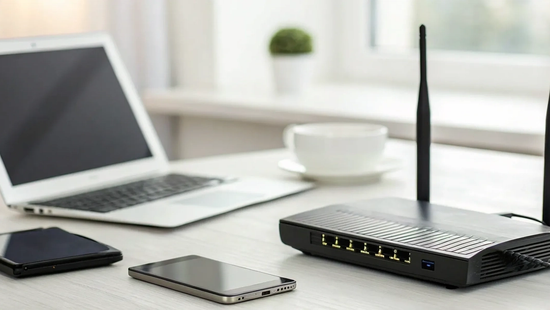
Does your internet connection start to crawl during peak hours? Maybe your video call freezes the moment your kids start gaming, or a 4K movie night turns into a buffering marathon. These are signs that your household’s demand for data is outgrowing your connection. While a standard plan might have been fine a few years ago, today’s connected homes need more power. This is where multi-gig internet comes in. It’s designed to provide more than enough bandwidth for everyone and every device, all at the same time. We’ll walk you through how this next-level speed solves common frustrations and keeps your digital life running smoothly.
Key Takeaways
- Solve household bandwidth battles: Multi-gig internet is designed for homes where everyone is online at once. It provides enough capacity for simultaneous 4K streaming, competitive gaming, and remote work across dozens of devices without causing slowdowns for anyone.
- Your home hardware must be multi-gig ready: To get the speeds you pay for, your router needs a multi-gig port (labeled 2.5G or higher) and should support WiFi 6. Your most important devices, like laptops and consoles, also need to be new enough to handle the faster connection.
- Look for symmetrical speeds and transparent pricing: The best multi-gig plans offer uploads that are just as fast as downloads, which is essential for video calls and content creation. Choose a provider that offers clear pricing without data caps or hidden fees to ensure you get the best long-term value.
What Exactly Is Multi-Gig Internet?
You’ve probably heard the term “multi-gig” floating around, and it sounds impressive, but what does it actually mean for your home internet? Simply put, multi-gig internet refers to any connection that delivers speeds faster than 1 gigabit per second (Gbps). For a long time, a 1 Gbps plan, often called "gig-speed," was the gold standard for fast home internet. But as our homes fill up with more connected devices and our online activities become more demanding, the need for even more speed has grown.
Multi-gig internet isn't just a slight upgrade; it's a significant leap forward in performance. These connections, which can offer speeds of 2 Gbps, 5 Gbps, or even higher, are becoming more available thanks to the expansion of fiber optic networks. Think of it as moving from a spacious highway to a futuristic superhighway with no speed limits. It’s designed to handle everything you can throw at it, from 4K streaming on multiple TVs to competitive online gaming and running a business from your home office, all at the same time without a single hiccup. With a provider like Novos Fiber, you get access to these next-level speeds, ensuring your connection is ready for today’s needs and whatever the future holds.
How We Measure Internet Speed
When we talk about internet speed, we're really talking about bandwidth, which is the maximum amount of data you can download or upload at any given moment. It’s measured in megabits per second (Mbps) and gigabits per second (Gbps), where 1 Gbps equals 1,000 Mbps. While a multi-gig plan offers incredibly fast top speeds, its real value is in providing more bandwidth for your entire household. This means more capacity for everyone and every device to connect simultaneously without slowing each other down. It’s the difference between a single-lane road and a multi-lane freeway during rush hour. More lanes allow more traffic to flow smoothly, which is exactly what more bandwidth does for your home network.
The Fiber Tech That Makes It Possible
So, what’s the magic behind these blazing-fast speeds? The answer is fiber optic technology. Unlike traditional cable or DSL internet that relies on copper wires, fiber internet uses thin strands of glass to transmit data as pulses of light. This method is significantly faster and more reliable, making it the foundation for multi-gig connections. One of the biggest advantages of fiber is its ability to offer symmetrical speeds, meaning your upload speed is just as fast as your download speed. This is a game-changer for video conferencing, uploading large files, and live streaming. With our high-speed fiber internet, you get the powerful and stable connection needed to support a fully connected home.
Multi-Gig vs. Traditional Broadband
When you hear terms like "multi-gig" and "broadband," it’s easy to assume they’re just different words for fast internet. But the technology behind them creates a world of difference in your daily online experience. Traditional broadband, which often relies on older cable or DSL infrastructure, can be a bit of a one-way street. It typically offers asymmetrical speeds, meaning your downloads are much faster than your uploads. This can lead to frustrating lags during video calls or long waits when you’re trying to send large files.
Multi-gig internet, delivered through a fiber optic network, is a total game-changer. It provides a connection faster than 1 gigabit per second (Gbps) and, more importantly, offers symmetrical speeds. This means your upload speeds are just as fast as your downloads. Think of it as a superhighway for your data, with traffic flowing smoothly in both directions. This balanced performance is what makes everything from streaming 4K movies to competitive online gaming feel effortless and instant.
Comparing Speed and Performance
The biggest difference you’ll feel between traditional broadband and multi-gig fiber is the consistency. With cable internet, your speeds can fluctuate depending on how many people in your neighborhood are online. Fiber, however, gives you a dedicated connection that isn’t shared, so your speed stays reliably fast. With a multi-gig plan, you get more than just a higher number; you get the capacity to have dozens of devices running at once without a single one slowing down. Uploading a massive video project, joining a work video conference, and streaming a movie in another room can all happen at the same time without a hiccup.
What's Required for Multi-Gig?
Getting multi-gig speeds to your devices involves more than just signing up for a plan. Your home equipment plays a crucial role. To take full advantage of the connection, you’ll need a modem and a router equipped with multi-gig Ethernet ports, often labeled as 2.5G or higher. Without this hardware, your connection will be limited by your gear, and you won't experience the full speed you're paying for. For larger homes, a mesh WiFi system can also be a great investment to ensure that powerful signal reaches every room. If you're unsure about your setup, our support team can help you find the right equipment.
Who Actually Benefits From Multi-Gig Speeds?
While a one-gigabit connection is incredibly fast and more than enough for many households, some people can truly use the extra power that multi-gig internet provides. Think of it less as a simple speed increase and more as opening up a wider highway for your data. If your current internet connection ever feels like it’s hitting a traffic jam during peak hours, a multi-gig plan might be the perfect solution for you. Let’s look at who gets the most out of these top-tier speeds.
The Power-User Household
Is your home buzzing with online activity? Maybe you’re on a video call in your office, your partner is streaming a 4K movie in the living room, and your kids are battling it out in an online game upstairs. This is where a multi-gig plan shines. It’s not just about one device going faster; it’s about delivering enough internet bandwidth for dozens of devices to perform at their best simultaneously. With a multi-gig connection, everyone can do what they love online without causing slowdowns or buffering for anyone else. It’s the ultimate way to keep a busy, connected family happy.
Remote Workers and Creators
If you work from home or create content, you know that time is money. A multi-gig connection can completely change your workflow. Imagine downloading or uploading massive project files, like high-resolution videos or complex design assets, in seconds instead of minutes. You can join video conferences with crystal-clear quality and collaborate in real-time without a hint of lag. For creators, this means faster uploads to YouTube and smoother streams on Twitch. Our high-speed fiber plans are designed to handle these demanding tasks, giving you a professional-grade connection right in your home office.
Gamers and Smart Home Fans
Serious gamers know that a great connection is about more than just download speed. Multi-gig fiber internet offers the ultra-low latency needed for a competitive edge, ensuring your actions register instantly. Plus, those massive game updates that used to take hours will be ready to go in minutes. At the same time, if your home is filled with smart devices, you have a different kind of demand. Security cameras, smart speakers, thermostats, and lights all need a stable connection. A multi-gig plan provides the capacity to run dozens of these devices seamlessly without interfering with your gaming, streaming, or work.
Do You Really Need Multi-Gig Internet?
With internet speeds getting faster all the time, it’s easy to wonder if you’re falling behind. Multi-gig plans sound impressive, but are they a necessity or just a nice-to-have? The truth is, the answer is different for everyone. It really comes down to how you and your family use the internet day-to-day. Instead of just chasing the highest number, it’s more helpful to think about what you actually need your connection to do. Are you constantly fighting for bandwidth, or does your current plan handle everything you throw at it? Let’s walk through a few questions to help you figure out if a multi-gig plan is the right move for your home.
Check Your Current Internet Habits
First, take a quick inventory of your household’s internet use. Think about a typical evening or weekend. Is one person streaming a 4K movie while someone else is in a competitive online game? Do you and your partner both work from home, frequently joining video calls and transferring large files? If your home is a hub of simultaneous, high-demand activity, you’re a prime candidate for a speed upgrade. A household where multiple people are working, learning, and streaming all at once can quickly push a standard connection to its limits. The more devices you have running data-heavy applications at the same time, the more you’ll feel the benefit of multi-gig speeds.
Is 1 Gig Fast Enough for You?
For a lot of families, a 1 Gig connection is more than enough to keep everyone happy. It can handle multiple 4K streams, online gaming, and dozens of smart devices without breaking a sweat. The real question is whether you’re experiencing any performance issues right now. If you rarely see buffering wheels, your games are lag-free, and your downloads are quick, you might already be in the sweet spot. A reliable 1 Gig fiber plan provides a massive performance jump over older internet technologies. For most everyday online activities, the difference between a 1 Gig and a 2 Gig plan might not even be noticeable, so if your current setup isn't causing any frustration, there's no pressure to upgrade.
Figure Out How Much Bandwidth You Need
If your current plan feels a bit strained, or if you’re thinking about the future, it’s time to consider how much bandwidth you really need. A 2 Gig plan is ideal for homes with a dozen or more devices all vying for bandwidth at once. It’s also a great way to future-proof your home. As technology evolves with things like 8K streaming, cloud gaming, and more sophisticated smart home ecosystems, our data needs will only grow. Some experts predict that a typical family of four will require speeds over 2 Gbps within the next decade. Choosing a multi-gig plan now ensures you have the headroom for future internet needs and can adopt new technology without worrying about your connection keeping up.
The Real-World Perks of Multi-Gig Internet
So, what does having multi-gig internet actually feel like? Beyond the impressive numbers, these super-fast speeds translate into real, tangible benefits that can smooth out your daily digital life. It’s about removing the friction between you and what you want to do online, whether that’s for work, play, or connecting with family. Let’s look at what you can expect when you make the switch.
Connect Everything Without Slowdowns
In a modern home, it’s easy to lose track of how many devices are connected to your Wi-Fi. Between laptops, phones, smart TVs, security cameras, and gaming consoles, the demand on your network adds up quickly. Multi-gig internet provides the massive bandwidth needed to handle it all at once. This means your video call won’t freeze when the kids start streaming a 4K movie, and your smart thermostat won’t drop its connection while you’re downloading a huge file. With enough power for a dozen or more devices running simultaneously, you can finally use all your tech without a single slowdown. Check out our internet plans to see how you can support every device in your home.
Better Streaming and Gaming
If you’re a serious gamer or a movie buff, you know that lag and buffering are the ultimate fun-killers. Multi-gig internet delivers the high-capacity connection you need for an uninterrupted experience. It provides more than enough bandwidth to stream in crystal-clear 4K or even 8K without a hiccup. For gamers, symmetrical upload and download speeds mean faster game updates, quicker load times, and incredibly low latency. This gives you a competitive edge where every millisecond counts. You can finally say goodbye to frustrating lag spikes and hello to seamless entertainment.
Quick File Transfers and Backups
For remote workers and content creators, time is money. Waiting for files to upload or download can bring your productivity to a halt. Multi-gig internet changes the game completely. Imagine downloading a massive 10GB project file in about 40 seconds instead of minutes. You can back up your entire computer to the cloud in a fraction of the time or send high-resolution videos to clients without a long wait. This efficiency lets you spend more time on what matters, not staring at a progress bar. As a local provider, we understand how important that is for our community’s professionals.
Get Ready for the Future
Technology isn’t slowing down, and your internet connection shouldn’t hold you back. As things like virtual reality, cloud gaming, and increasingly complex smart home systems become mainstream, the demand for bandwidth will only grow. Choosing a multi-gig plan is about future-proofing your home. It ensures you have the speed and reliability to adopt new technologies as soon as they arrive, without worrying about another upgrade. You’ll be prepared for the next wave of digital innovation, making your connection a long-term investment. See if this future-ready service is available in your area.
What Gear Do You Need for Multi-Gig Speeds?
Signing up for a multi-gig internet plan is the first step, but to actually experience those incredible speeds, your home equipment needs to be ready. Think of it like this: you can have the widest, fastest highway in the world leading to your house, but if your driveway is a narrow dirt path, you won't be able to get cars through at top speed. Your modem, router, and even your personal devices are all part of that path.
Getting your gear in order isn't as complicated as it might sound. It’s mostly about making sure each piece of the puzzle can handle the speed you’re paying for. When you get high-speed fiber internet, the connection coming into your home is incredibly powerful. Your job is to ensure that power flows smoothly all the way to your laptop, gaming console, or smart TV. Let’s walk through the three key components you’ll want to check: the modem (or ONT for fiber), your router, and the devices you use every day.
The Right Modem and Ports
With fiber internet, you don’t use a traditional modem. Instead, you have an Optical Network Terminal, or ONT. This device is what translates the light signals from the fiber optic cable into an internet connection for your home. To get multi-gig speeds, this ONT and your router need special ports that can handle that much data.
You’ll want to look for equipment with a "Multi-Gig Ethernet" or "2.5G Multi-Gig Ethernet" port. These ports are built to manage speeds greater than 1 Gbps. Without one, your connection will be capped at 1 Gbps, no matter how fast your plan is. When you sign up with a provider like Novos Fiber, we make sure the ONT we install is fully capable of delivering the speeds your plan offers.
Why Your Router and Cables Matter
Your router is the traffic director for your home network, sending the internet connection to all your devices. Just like the ONT, your router must have a multi-gig port to receive the full speed. But for a great wireless experience, you also need a router that supports the latest Wi-Fi standards.
To get the most out of a multi-gig connection wirelessly, you’ll want a router that supports at least WiFi 6. WiFi 6 is designed to deliver faster speeds more efficiently, especially when many devices are connected at once. For wired connections, check your Ethernet cables, too. Using an older Cat5e cable can create a bottleneck, so stick with Cat6 or higher to ensure a stable, full-speed connection.
Make Sure Your Devices Can Keep Up
The final piece of the puzzle is the device you’re actually using. Your brand-new multi-gig internet can’t make an old laptop or smartphone faster than its hardware allows. To truly benefit from these speeds, your computers, phones, and tablets need to be compatible.
Most newer devices support WiFi 6, but it’s always a good idea to check the specifications of your most important gadgets. For a wired connection, your computer’s network card must also be able to handle multi-gig speeds. If you run a speed test on a brand-new computer and an older tablet, don't be surprised if you see very different results. It’s not a problem with your internet; it just means older devices might not get the full speed.
How to Choose the Right Multi-Gig Plan
Once you’ve decided to make the leap to multi-gig internet, the next step is picking the right plan. Not all plans are created equal, and the details can make a huge difference in your daily experience. Looking beyond the advertised speed will help you find a plan that delivers on its promises without any frustrating surprises. Think about speed, transparency, and overall value to find the perfect fit for your home or business.
Look for Symmetrical Speeds
Have you ever noticed that your internet seems great for streaming movies but slows to a crawl when you try to upload a video? That’s because many internet plans have asymmetrical speeds, meaning your download speed is much faster than your upload speed. For the best multi-gig experience, you’ll want symmetrical speeds, where your upload and download speeds are the same. This is a game-changer for video calls, online gaming, and uploading large files. Most multi-gig plans from fiber optic internet providers offer this feature, giving you a consistently fast connection no matter what you’re doing.
Avoid Data Caps and Hidden Fees
Nothing ruins the excitement of a new internet plan faster than unexpected charges on your first bill. Some providers lure you in with a low price, only to add equipment rental fees, installation costs, or other hidden charges. It’s also important to watch out for data caps. A multi-gig plan is meant for heavy use, and the last thing you want is to have your speed throttled or be charged extra for using the internet you pay for. Look for a provider that offers straightforward, transparent pricing with no data caps or surprise fees. This way, you know exactly what you’re paying for each month.
Check for Availability and Reliability
The fastest internet plan in the world doesn’t do you any good if it’s not available at your address. Before you get too attached to a specific plan, the first step is always to confirm which providers serve your home. You can usually do this by entering your address on the provider’s website. At Novos Fiber, we’re always expanding, so you can check out a map of where we serve to see if we’re in your area. Beyond just being available, you also want a connection that’s reliable. A consistently stable connection is just as important as raw speed, especially when you’re counting on it for work or school.
Calculate the Real Value
When you’re comparing plans, it’s easy to just look at the monthly price tag. But to find the best deal, it helps to think about the cost per Mbps (megabit per second). A slightly more expensive plan might actually offer a much better value if it delivers significantly more speed and reliability. Consider the whole package: symmetrical speeds, no data caps, and included equipment. A plan that checks all these boxes often provides the best long-term value, ensuring you get the performance you need without any headaches or hidden costs down the road.
Are There Any Downsides to Multi-Gig?
Multi-gig internet is an incredible leap forward, but it’s fair to ask if it’s the right choice for every single household. Like any premium service, there are a few things to consider before you jump in. Being realistic about your needs helps you find the perfect fit for your home and your wallet. The main points to think about are the monthly cost, whether you’ll truly feel the extra speed in your day-to-day activities, and if your current devices can even handle that much bandwidth. Let’s break it down so you can make a confident decision.
The Cost of Speed
It’s no surprise that faster speeds come with a higher price tag. Multi-gig plans deliver a massive amount of bandwidth, and the monthly cost reflects that bigger pipeline for data. While these plans often offer great value when you look at the cost per Mbps, the bottom line is still higher than a standard 1 Gig plan. Before committing, it’s a good idea to look at your budget and weigh the benefits. For a family of streamers, gamers, and remote workers, the extra investment can be a game-changer, eliminating lag and buffering for good. You can explore different internet plans to see how the costs and speeds line up.
Will You Actually Notice a Difference?
This is the million-dollar question. For many people, "the difference between 1 gig and 2 or 3 gig internet might not be noticeable in everyday use." If your online life mostly consists of scrolling social media, streaming HD video on one TV, and checking emails, a 1 Gig connection is already giving you a flawless experience. You’ll start to feel the power of multi-gig when multiple, high-demand activities are happening at once. Think downloading huge game files in minutes instead of hours, streaming in 4K on several screens simultaneously, or uploading massive video projects without a hitch.
Is It More Speed Than You Can Use?
While multi-gig internet sounds amazing, some users find it "hard to fully use these very high speeds in a typical home." Your internet connection is only one part of the equation. The speed you actually experience is limited by the slowest component in the chain. This could be the server you’re connecting to, your device’s own processing power, or its Wi-Fi capabilities. For example, even with a 5 Gig plan, your older laptop with a Wi-Fi 5 card won't be able to use all that speed. It’s about having the capacity ready for when you need it.
Clearing Up Common Multi-Gig Myths
When you see ads for multi-gig internet, the speeds sound incredible. But with big promises come big questions, and it’s easy to get tangled up in the hype. Let’s clear the air and tackle some of the most common myths so you can decide if an upgrade is truly the right move for your home.
Expectation vs. Reality
One of the biggest misconceptions is that a higher speed number automatically makes everything better. While multi-gig internet is incredibly fast, your actual experience depends on more than just the number on your plan. For example, many gamers think a multi-gig plan will eliminate lag, but gaming relies more on low latency (the time it takes for data to travel) than raw bandwidth. A stable fiber connection with low latency will often give you a better gaming experience than a less stable connection with higher speeds. Your devices and home network setup also play a huge role.
The Truth About Equipment Costs
That shiny new multi-gig plan won't do you much good if your gear can't keep up. To actually get those speeds on your devices, you need a whole chain of compatible hardware. This includes a modem or router with multi-gig ports, high-quality Ethernet cables, and a computer or device with a network card that can handle the speed. Without the right equipment, you’ll be paying for performance you can’t access. Before you commit, take a quick inventory of your current setup to see what you might need to upgrade.
How to Read the Fine Print
The advertised price is just the beginning. When comparing internet plans, it’s essential to look at the total cost and terms. Some providers use low introductory rates that skyrocket after the first year. You should also watch out for hidden equipment rental fees, data caps that limit your usage, and asymmetrical speeds where your upload is much slower than your download. At Novos Fiber, we believe in transparency. We offer straightforward pricing with no hidden fees or data caps, so you know exactly what you’re getting: ultra-fast, reliable fiber internet.
What's Next for Super-Fast Internet?
Multi-gig internet feels incredibly fast, but it’s really just the beginning. As our digital lives become more complex, the demand for even greater speed and capacity is pushing the industry forward. Internet service providers are already looking ahead, planning for a future where today's top speeds are tomorrow's standard. This means building more robust networks and exploring the next generation of internet technology to keep up with our ever-growing needs for seamless connectivity at home and at work.
The Road to 10 Gig
The next major milestone on the horizon is 10 Gig internet. While you might see "10G" advertised, it's important to understand what that means. "One of the most common misconceptions about 10G cable internet is confusing it with other technologies," as it's often a marketing term for an upgraded cable network, not true 10 Gbps fiber speeds. The real goal is to deliver symmetrical 10 Gbps connections directly to homes. While today's multi-gig plans offer incredible performance, the road to 10 Gig is about creating a new standard that can handle anything we throw at it, from holographic meetings to fully immersive virtual worlds.
Bringing Fiber to More Homes
Of course, incredible speed doesn't mean much if you can't get it. The most important development is the continued expansion of fiber optic networks. As one household put it, "My partner and I work from home, our kid sometimes has virtual school, and we all stream," highlighting why even average families are starting to need more bandwidth. For local businesses, a reliable multi-gig connection can unlock their full potential. That’s why providers like us are focused on bringing high-speed fiber services to more communities, ensuring everyone has access to the powerful, reliable internet they need to live, work, and play without limits.
Frequently Asked Questions
Do I need special equipment for multi-gig internet? Yes, your home hardware plays a big role. To get the full benefit of a multi-gig connection, your router needs to have a multi-gig Ethernet port, which is often labeled as 2.5G or higher. Your personal devices, like laptops and smartphones, also need to be modern enough to handle these higher speeds. It’s a team effort; your plan, your router, and your devices all need to work together to deliver that top-tier performance.
How can I tell if I actually need more than a 1 Gig plan? A great way to decide is to think about your home's internet "rush hour." If you frequently have multiple people streaming in 4K, gaming competitively, and joining video calls all at once, and you notice buffering or lag, then a multi-gig plan is likely a great fit. If your current 1 Gig plan handles everything you do without any frustrating slowdowns, you might already have all the speed you need for now.
Why is symmetrical speed such a big deal with these plans? Symmetrical speed means your upload speed is just as fast as your download speed, which is a key advantage of fiber internet. While fast downloads are great for watching movies or browsing, fast uploads are essential for modern life. They ensure your video calls are crystal-clear, you can send large work files in seconds, and your live streams are smooth, creating a much more balanced and responsive connection.
Will a multi-gig plan make my Wi-Fi faster in every room? A multi-gig plan brings a faster connection into your home, but your Wi-Fi signal strength depends on your router. To spread that speed effectively, you’ll want a modern router that supports at least WiFi 6. For larger homes or houses with thick walls, a mesh Wi-Fi system is a fantastic way to ensure a strong, consistent signal reaches every corner, so you can actually use that amazing speed wherever you are.
If I get a multi-gig plan, will all my devices run at that top speed? Not necessarily, and that’s perfectly okay. Each device can only go as fast as its own internal hardware allows. A new computer with the latest Wi-Fi technology will see much faster speeds than an older tablet. The true power of a multi-gig plan is having a massive amount of total bandwidth, so all your devices, both new and old, can perform at their personal best at the same time without interfering with each other.